

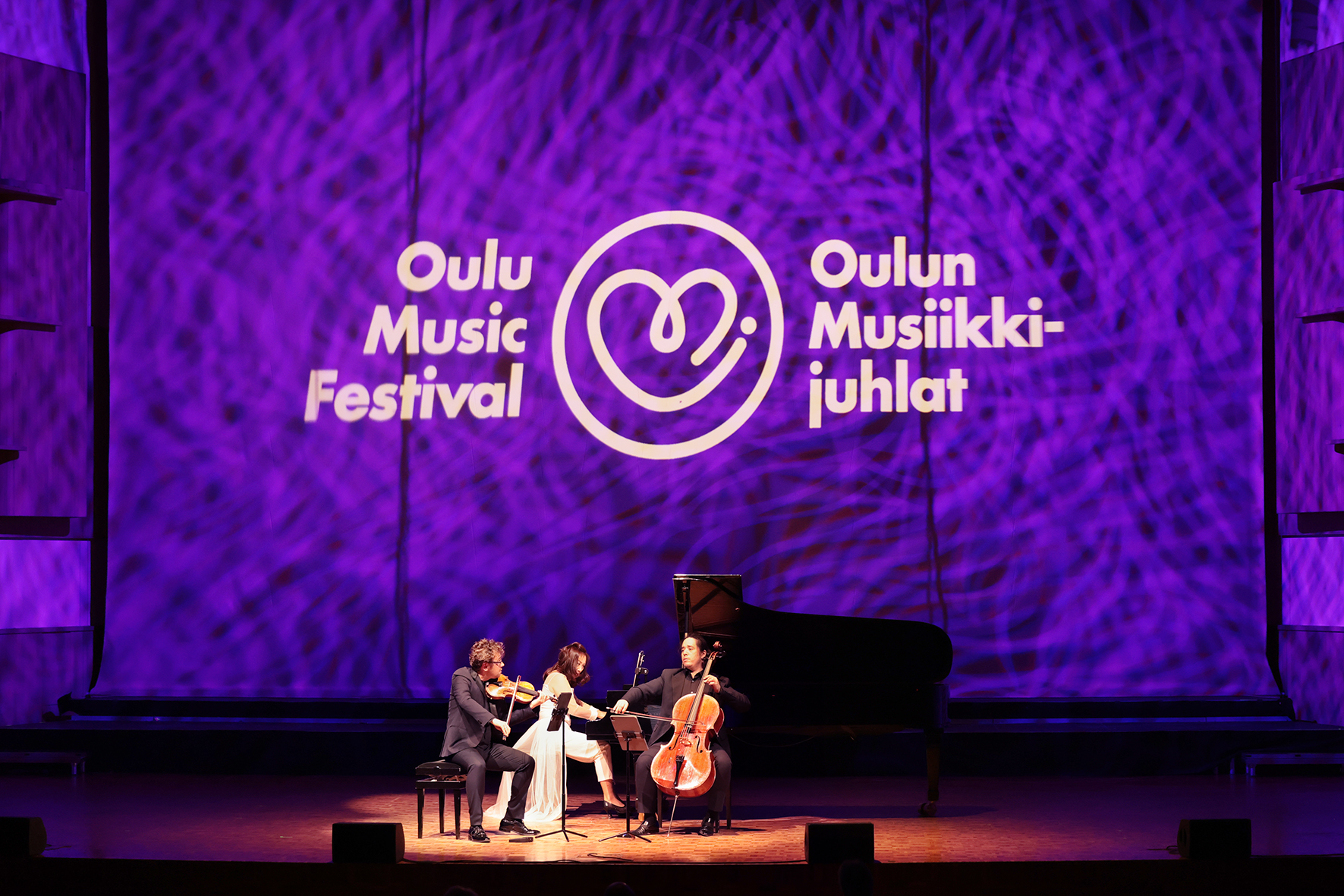
At the last moment the grand piano got a wad of paper
The ensemble, which has garnered much praise and attention for its recordings and concerts, proved to be worthy of its reputation in Oulu.
In the chamber music series of the Oulu Music Festival, a world-class piano trio was heard on Friday evening when the widely touring Sitkovetsky Trio took the stage. The ensemble, which has received abundant praise and attention for its recordings and concerts, proved fully worthy of its reputation.
The interesting program began with the Piano Trio No. 2 in A minor, Op. 34 (1887) by the French composer Cécile Louise Chaminade. Like many other women composers, Chaminade encountered belittlement and outright discrimination during her career, and her music has only appeared more widely in concert halls during this century. The trio is skillfully composed and brimming with Romantic expression, in which the brilliantly written and exuberantly virtuosic piano part plays a central role.
Sitkovetsky Trio’s interpretation was dazzlingly virtuosic and precisely characterized in its moods. Sonically, however, Qian Wu was surprisingly overshadowed—particularly in the first movement—by Alexander Sitkovetsky and Isang Enders. This imbalance affected the overall impression of the work, since Chaminade wrote the piano part in an almost concerto-like manner, solid and richly abundant.
In the world premiere of Lotta Wennäkoski’s work Blended Notes (2024–25), the trio was joined by eight singers from the Oulu-based Soma Ensemble. It was refreshing to hear genuine hardcore modernism after quite some time.
Wennäkoski’s composition contains such a wealth of musical information and new sonic effects that a significant portion of the piece felt like standing there wide-eyed in astonishment. For example, striking the grand piano with a stack of paper is such a crazy idea that it almost has to be genius.
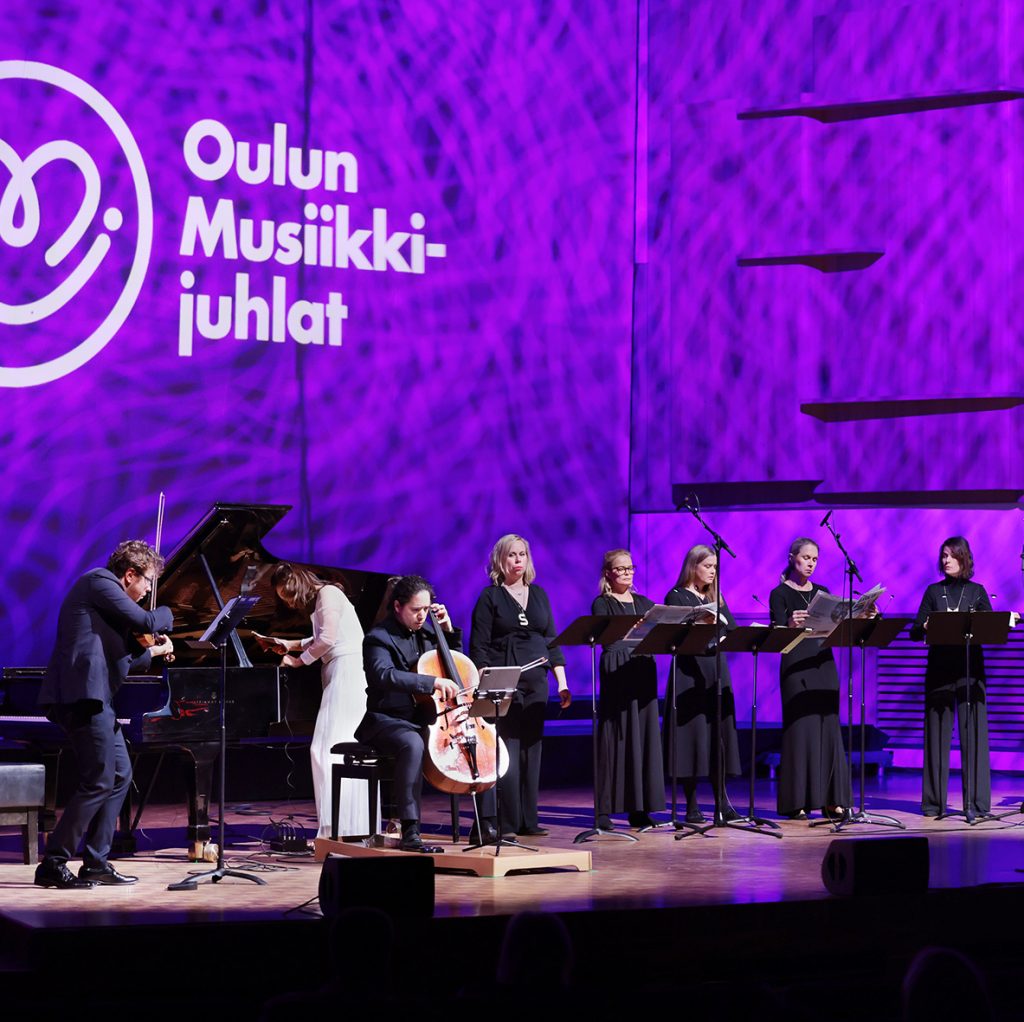
Soma Ensemble carried out their extremely demanding part—far removed from traditional vocal expression—with dazzling enthusiasm and virtuosity. However, it was difficult to make out the text of the piece, so the message related to climate change would have remained completely obscure without the program notes.
After the intermission, Johannes Brahms’s Piano Trio No. 1 in B major, Op. 8 (1853) crowned the concert with a perfectly controlled interpretation. The four-movement work, which grows to symphonic proportions, is built—like most Classical-Romantic piano trios—around a rich and technically demanding piano part.
In this work, Wu was able to demonstrate the full breadth of her skills and tonal palette. In a manner typical of Brahms, the pianism—based on thick chords and octaves—sang and thundered in the artist’s hands with an air of authority.
Sitkovetsky and Enders also contributed their own part to the whole, devotedly interpreting the great emotional surges of the young Brahms. Particularly impressive was the trio’s interpretation of the work’s Scherzo movement, in which the artists conjured not only light, effortless playing but also a sense of mischief that is rare for the composer.
The audience’s enthusiastic reception was rewarded with the second movement of Felix Mendelssohn’s Piano Trio No. 1, Op. 49, performed in an almost perfect interpretation.
Hannu Hirvelä

